

The question I get asked most: “Can I use AI to write content, or will Google penalize me?”
Short answer: Google can spot AI patterns, but they don’t care if you used AI. They care if your content sucks.
I’ve been using AI content tools since Jarvis (before it became Jasper and got all corporate). I’ve seen what works and what tanks. Let me save you some pain.
Yes. Google’s algorithms can identify the telltale signs – repetitive phrasing, generic structure, that overly-polished tone that screams “no human actually wrote this.”
But here’s what most people miss: Google isn’t hunting down AI content just because it’s AI.
They’re looking for three things:
- Quality – Is it useful or just fluff? AI content without editing is usually the latter.
- Relevance – Does it answer what people are searching for? Most AI content misses the mark because it’s too generic.
- Expertise – Can you tell a real person with actual knowledge wrote this? This is where AI falls flat. It can string together coherent sentences but can’t fake experience.
I tested this early on. Published a fully AI-generated article, zero editing, thinking I’d save time. Traffic tanked. The content was generic nonsense that said nothing my competitors weren’t already saying (but worse). Learned that lesson fast.
Does Google Care If You Use AI?
No. Google’s own guidance is clear: they want helpful, reliable content created for people. If AI helps you do that, they’re fine with it.
The problem? Most AI content doesn’t meet that bar without serious editing.
What fails:
- Generic “5 tips” posts that could apply to literally any industry
- Surface-level content with zero original insights
- That predictable AI rhythm where every paragraph sounds the same
- No real examples, no data, no personality
What works:
- Using AI for the first draft, then editing the hell out of it
- AI handles structure, you add the expertise
- Using tools like Claude for research, not final output
- Speed from AI + your actual knowledge = content that ranks
For my real estate clients, this matters. A generic “How to Buy a Home” post won’t rank. But using AI to draft a neighborhood guide, then adding actual street names, school ratings, HOA fees, and local market data? That works.
The exact workflow for creating neighborhood content that ranks – including how to use AI without it looking generic – is in my real estate SEO guide. It covers the 3-tier neighborhood strategy that gets agents ranking for hundreds of long-tail keywords.
How I Use AI Without It Looking Like AI
My process after years of figuring this out:
Step 1: AI does the grunt workOutlines, first drafts, research synthesis. Saves me from staring at a blank screen for an hour.
Step 2: I add what AI can’tSpecific examples. Real data. Personal insights. The stuff that actually demonstrates expertise.
Step 3: Edit for voiceAI is too diplomatic, too safe. I cut the fluff and make it sound like a human wrote it.
Step 4: Add specificsReal numbers. Actual addresses. Examples that prove I know what I’m talking about.
For real estate content: MLS data, specific subdivisions, actual school district boundaries, real HOA fees. That’s what separates ranked content from page 4 content.
What Actually Works
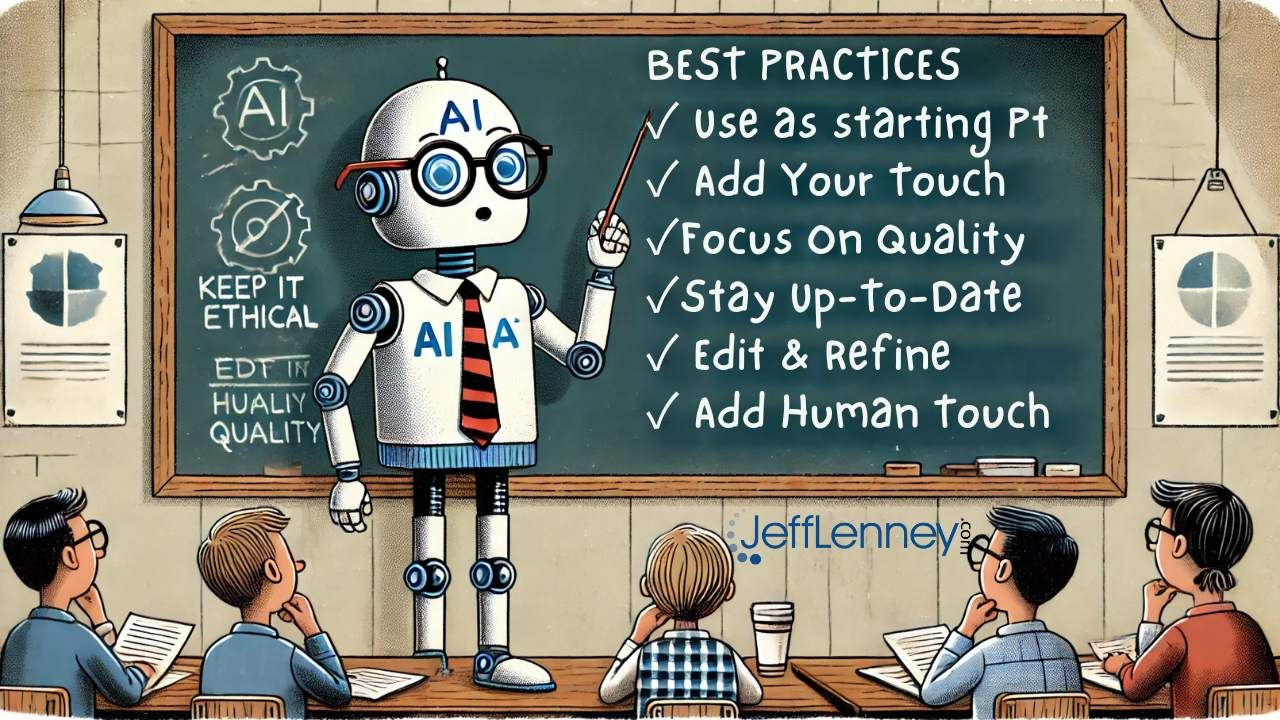
Based on competitive markets where most SEOs fail:
Use AI as your research assistant, not your writerIt’s great at organizing information. Terrible at original thinking.
Add details AI can’t generateSpecific, verifiable facts that demonstrate you actually know your market.
Write for people who need help, not for GoogleIf your content genuinely solves someone’s problem, it’ll rank. If it’s keyword-stuffed nonsense, it won’t.
Edit like you mean itAI needs heavy editing. Cut the corporate speak, tighten everything, make it sound like you.
Stay consistentAI helps you publish without burning out. Use it to maintain quality at scale, not to pump out more mediocrity.
This is what I teach in my content marketing guide for real estate agents – how to create quality content in 95 minutes weekly using AI-assisted workflows instead of spending 4 hours per post.
The Real Risk
It’s not Google detecting AI. It’s publishing content nobody cares about.
I’ve seen real estate agents waste time and money on AI content that generates zero leads. Why? Because it was generic, had no local expertise, and didn’t answer actual buyer questions.
Google’s getting better at spotting helpful content versus SEO spam. AI fluff falls into the spam category.
What Google penalizes:
- Thin content with no unique value
- Wrong search intent
- Poor engagement metrics
- No demonstrated expertise
What Google rewards:
- Comprehensive answers to real questions
- Content from actual experts
- Pages people engage with
- Sites that earn natural links
Where This Is Headed
AI tools keep improving. Google’s ability to evaluate quality also keeps improving.
- Winners: People who use AI to enhance their expertise.
- Losers: People trying to game rankings with mass-produced AI content.
For real estate, legal, finance – anywhere expertise matters – you can’t fake it. Google’s E-E-A-T guidelines mean content needs to show real knowledge.
This is why I focus on helping established businesses showcase expertise. AI speeds things up, but the expertise has to be real.
Bottom Line
Google can detect AI content. They don’t care about the tool. They care if your content helps people.
Use AI to work smarter. Let it handle first drafts and research. Then add the expertise that makes content valuable.
Content that wins is AI-assisted but human-driven. Use the tools without letting them replace your knowledge.
Also worth checking out: my Google Business Profile guide specifically for real estate agents. It’s an underrated channel that generates 15-25 calls monthly when optimized right, and yes, you can use AI to speed up the posting process there too.
Questions about AI and content? Contact me.
