

Jeff Lenney here. Let’s talk about generative search results, because this is changing how SEO works and most people are completely ignoring it.
If you don’t know what generative search is, it’s when AI (like Google’s SGE or ChatGPT) generates an answer directly in the search results instead of just showing you a list of links. The AI reads a bunch of sources, synthesizes the information, and gives you a summary right there.
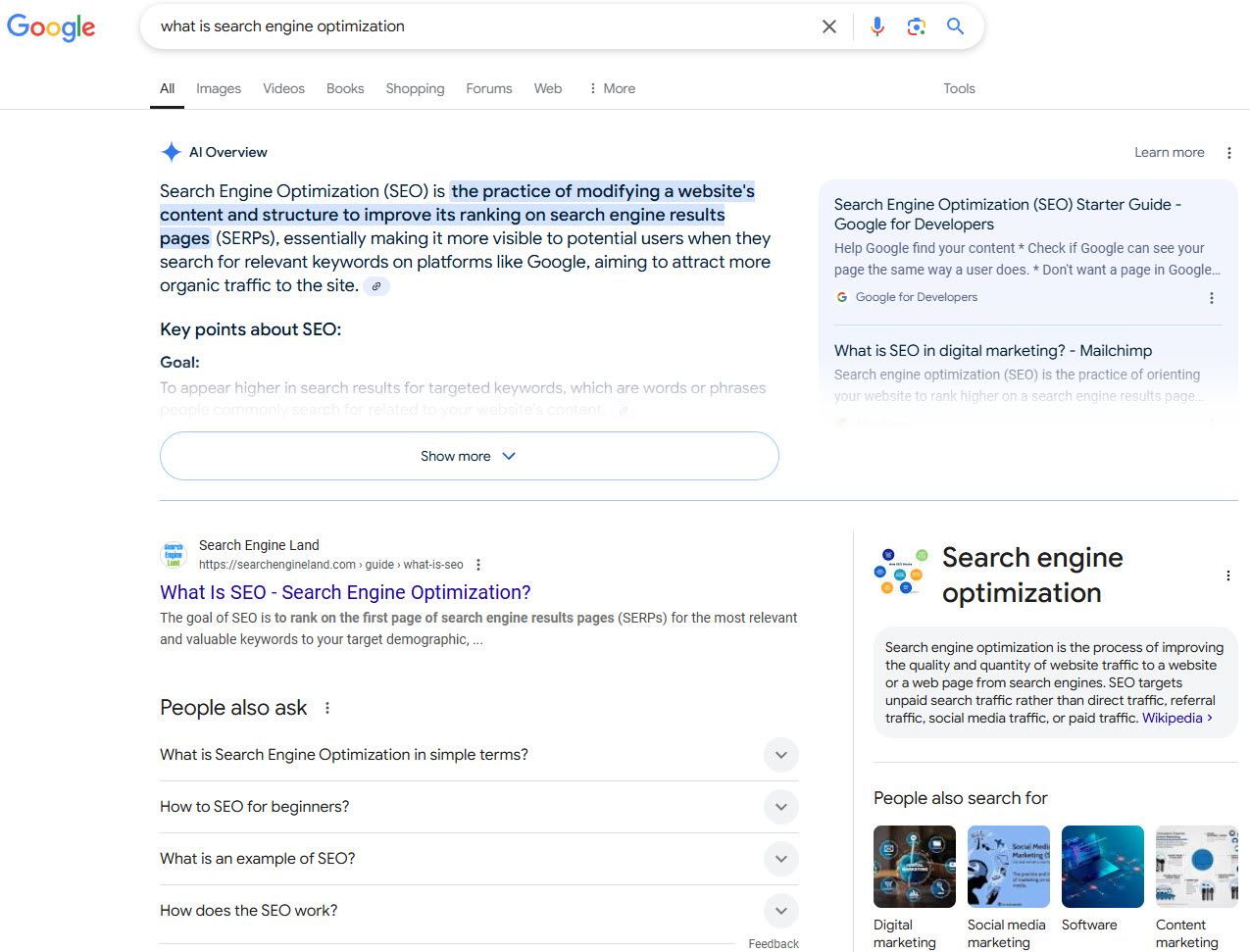
Here’s why this matters: if your content gets cited in that AI-generated answer, you’re getting visibility without the user even needing to click. And if Google’s AI is citing you as a source, that’s a massive trust signal.
This isn’t some future prediction. It’s happening right now. Google’s testing it, Bing has it, ChatGPT is being used for search. If you’re not thinking about how to show up in these AI-generated results, you’re already behind.
Why You Should Actually Care About This
Traditional search is crowded as hell. You’re competing with everyone for those 10 blue links on page 1. But generative search? That’s different.
When AI features your content in a generated answer, you’re getting prime visibility. You’re essentially being recommended by the AI as one of the trusted sources. That’s huge for brand authority.
Plus, this is still early days. Most people aren’t optimizing for this yet, which means there’s an actual opportunity to get ahead of the curve instead of playing catch-up like we usually do in SEO.
E-E-A-T: Why Google’s AI Cares About Your Credibility
E-E-A-T stands for Experience, Expertise, Authoritativeness, and Trustworthiness. This isn’t new, but it matters way more for generative search because AI needs to determine which sources to trust and cite.
Here’s what each piece actually means:
- Experience: You need firsthand experience with what you’re talking about. If you’re reviewing a product, you better have actually used it. If you’re giving SEO advice, you need to show real campaign results. No theoretical BS.
- Expertise: You need to actually know your stuff. Real knowledge, not just regurgitating what’s already ranking on page 1. This is where unique insights matter.
- Authoritativeness: Other people need to recognize you as an authority. Backlinks from reputable sites, mentions in industry publications, speaking engagements. External validation that you’re legit.
- Trustworthiness: Is your information accurate? Do you have HTTPS? Do you update your content? These are the trust signals AI looks for when deciding whether to cite you.
I’ve built my entire SEO business around E-E-A-T because it works. With the Timothy Sykes site I worked on, we didn’t just claim expertise. We showed actual trading results, media appearances, and student success stories. That’s the kind of proof AI is looking for.
What a Generative Search Result Actually Looks Like
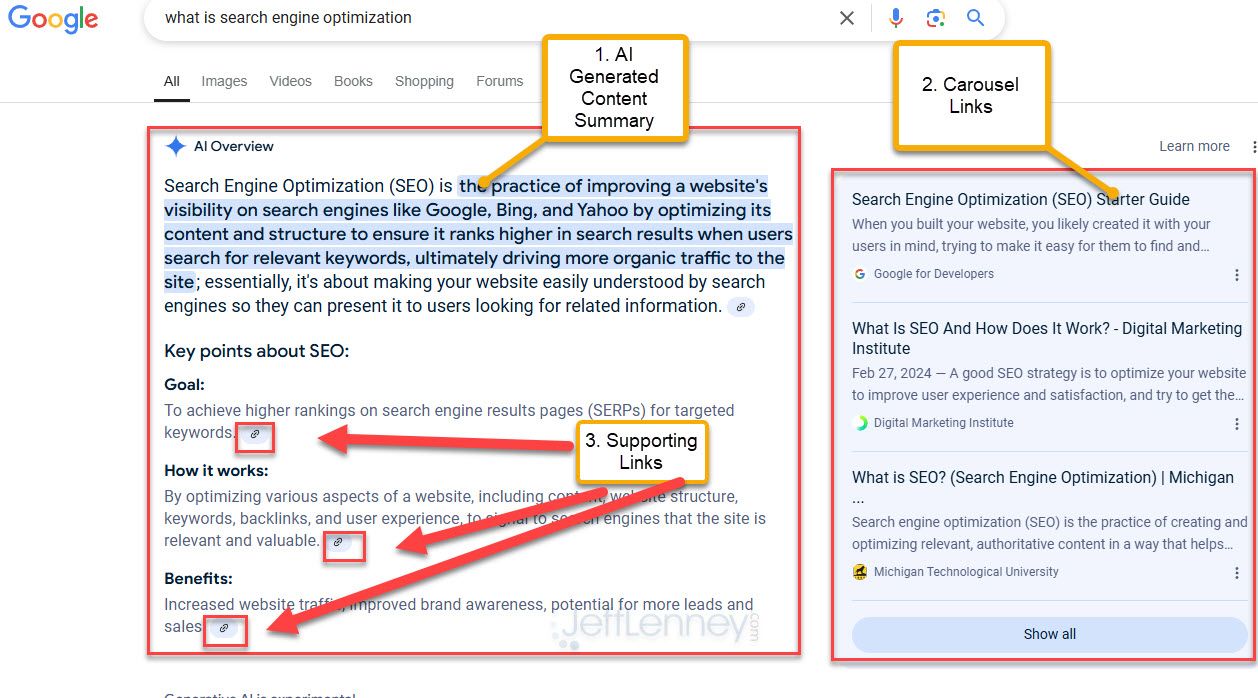
Before we get into optimization, let’s break down what you’re actually trying to rank in:
AI-Generated Summary: This is the main answer. It’s what the AI creates by synthesizing information from multiple sources. Your goal is to be one of the sources it’s pulling from.
Carousel Links: Below or next to the summary, you’ll often see a carousel of links to relevant websites. These are prime spots for visibility. Getting featured here means users can click through for more detail.
Supporting Links: Throughout the AI summary, there are usually inline citations linking to specific sources. Getting your content linked here is like getting cited in a research paper. It boosts your credibility.
How to Actually Optimize for Generative Search
Forget keyword stuffing. AI is way smarter than that. Here’s what actually works:
Use Structured Data
Schema markup tells search engines exactly what your content is about. It’s like giving AI a cheat sheet to understand your page.
For most content, you want Article schema at minimum. If you’re writing how-to guides, use HowTo schema. Product reviews? Product schema. FAQ content? FAQ schema.
I covered this in my real estate SEO guide where schema is critical. Using the wrong type can actually hurt you, so make sure you’re implementing it correctly.
Write Content That Actually Answers Questions
This sounds obvious but most people miss it. Your content needs to directly answer specific questions in a clear, concise way.
AI is looking for the best answer to feature. If your content rambles or takes 800 words to get to the point, you’re not getting cited.
Structure your content with clear headings. Use short paragraphs. Get to the answer quickly. Then provide depth for people who want more detail.
Target Specific, Long-Tail Queries
Instead of broad topics, create laser-focused content that addresses very specific questions.
Don’t write “SEO Guide.” Write “How to Optimize Title Tags for Generative Search” or “5 Ways to Improve E-E-A-T for Affiliate Websites.”
These specific pieces are way more likely to get cited in AI-generated answers because they directly match what someone’s asking.
Make Your Content Actually Good
AI can detect quality. If your content is thin, generic, or just repackaged information from other sites, you’re not getting featured.
Add unique insights. Include data from your own experience. Tell real stories. Make it genuinely useful, not just SEO-optimized filler.
Build Authority Beyond Your Website
Your website alone isn’t enough. You need to build authority across the web.
Guest posting: Write for reputable sites in your industry. This builds backlinks and gets your name out there. The more you’re recognized as an authority elsewhere, the more AI trusts you.
Social media presence: Yeah, I know, social media. But having an active presence signals that you’re a real person with real expertise. Plus, AI is starting to pull from social platforms too.
Community engagement: Answer questions on Reddit, Quora, industry forums. Help people. This builds your reputation and creates more mentions of your name across the web.
Don’t Forget the Technical Basics
All the AI optimization in the world won’t help if your site is slow or broken.
Page speed matters. Make sure your site loads fast. AI considers user experience signals, and a slow site is a bad user experience.
Mobile optimization is critical. Most searches happen on mobile. If your site sucks on mobile, you’re toast.
Fix broken links. Regularly audit your site for broken links and fix them. They hurt user experience and make AI question your site quality.
Use HTTPS. This should go without saying in 2026, but if you’re still on HTTP, fix that immediately.
Track Your SGE Performance
You can’t improve what you don’t measure. Here’s what to track:
SGE visibility: Are you showing up in AI-generated answers? For which keywords? Track this manually by searching your target keywords and seeing if you’re cited.
Traffic from generative search: Use analytics to identify traffic coming from SGE. This is still tricky to track perfectly, but you can start to see patterns.
Engagement metrics: Are users from SGE actually engaging with your content? Check time on page, bounce rate, and conversion rates for SGE traffic vs. regular organic.
Rankings in the buffer zone: Use Ahrefs or SEMrush to find pages ranking positions 10-20. These are prime candidates for SGE optimization. They’re close but not quite there. Give them some attention and they might break through.
This Is an Ongoing Process
Generative search is evolving fast. What works today might not work in six months.
Pay attention to how AI is summarizing information in your niche. What sources is it citing? What format works best? Adjust your strategy based on what you’re seeing.
Stay current with changes. Google, Bing, ChatGPT – they’re all iterating on this constantly. Follow industry blogs, test things yourself, and be ready to pivot.
The Reality Check
Look, I’m going to be honest with you. I’m an SEO consultant who’s been doing this for 15+ years, and if you search “Jeff Lenney” right now, I’m probably not dominating the generative search results for my own name.
Why am I telling you this? Because even people who know this stuff have to work at it. This isn’t some magic trick where you implement schema and suddenly you’re everywhere.
It takes consistent effort. Good content. Real authority building. Time.
But that’s also why there’s opportunity. Most people won’t do the work. They’ll read articles like this, think “that sounds hard,” and go back to chasing quick wins that don’t exist.
If you’re willing to actually implement this stuff, you’ve got a real advantage.
What You Should Do Next
Start with your best content. Find the pages that are ranking okay but not great (positions 10-20). Those are your quick wins for SGE optimization.
Add proper schema markup if it’s missing. Improve the content with unique insights and real examples. Make sure the technical stuff is solid.
Then create new content specifically targeting long-tail queries in your niche. Write the best possible answer to specific questions. Format it clearly. Back it up with real experience and data.
Build your authority externally. Guest post. Engage in communities. Get your name out there as someone who actually knows what they’re talking about.
And be patient. This isn’t overnight stuff. But if you’re consistent, you’ll start seeing your content show up in those AI-generated results.
That’s it. That’s the formula. Now go actually do it instead of just reading about it.
Questions? Drop them in the comments. I actually read and respond to these.
